May 242010
 

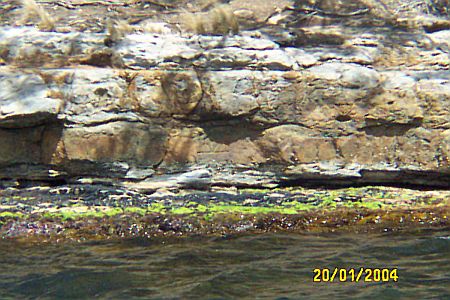
The 1841 sea level benchmark (centre) on the `Isle of the Dead', Tasmania. According to Antarctic explorer, Capt. Sir James Clark Ross, it marked mean sea level in 1841. Photo taken at low tide 20 Jan 2004. Mark is 50 cm across; tidal range is less than a metre. © John L. Daly 2004

The mark of a really great book is that there’s a great deal to say about it. Twice now Fergus Fleming’s Barrow’s Boys: A Stirring Story of Daring, Fortitude, and Outright Lunacy has inspired posts. This will make it three, and I’m already anticipating post number four in a few days.

The late John Daly was a sufficiently effective skeptic of conventional climate science that upon his death in 2004 climate scientist Phil Jones characterized Daly’s death as “cheering news” in an e-mail to Michael (hockey stick) Mann. Author of The greenhouse trap: Why the greenhouse effect will not end life on earth, Daly latched on to a curious historical footnote – Captain Sir James Clark Ross’s 1841 visit to Tasmania as part of his voyage of exploration commissioned by John Barrow. During this visit, Ross collaborated with Thomas Lempriere to place a benchmark of the sea level. Taken as evidence of a rise in mean sea level, Daly argues persuasively that in fact the mark demonstrates no such substantial rise.

Daly’s fascinating analysis is captured in a series of posts at his website:

Daly makes his case through a painstaking forensic investigation of the historical documentation regarding Ross’s original benchmark and subsequent measurements of mean sea level. These are remarkably complicated yet important questions and Daly set an outstanding example of how to analyze them.

May 172010
 

Friday, I discussed Fergus Fleming’s Barrow’s Boys: A Stiring Story of Daring, Fortitude, and Outright Lunacy. Yet another highlight of that book was its treatment of the lost Franklin Expedition. In 1845, Barrow dispatched Sir John Franklin to find the Northwest passage – the long sought northern route connecting the Atlantic and Pacific.

Continue reading »

May 142010
 

It was one of the most memorable television events of the 1970s: a twelve hour mini-series that traced the story of author Alex Haley’s Roots back to an African ancestor. In one of many gripping episodes, an African Muslim, “Kunte Kinte” (played by LeVar Burton, minus the iconic Star Trek visor), was kidnapped by evil white slavers, carried to the African shore, and dispatched to America never to see his homeland again. It made for a powerful drama (now available on DVD) that brilliantly illustrated the evil of slavery. This is the version of history I was taught in school.

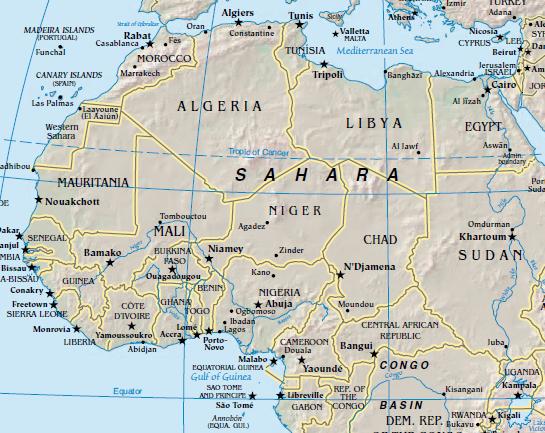
A few weeks ago, I noted a remarkable article by Henry Lewis Gates, Jr., “Ending the Slavery Blame-Game.” Dr. Gates explained that exploration of the African interior by Europeans was an eighteenth century endeavor. He further reported research that 90% of Africans shipped to the New World were in fact first enslaved by their fellow Africans and then sold to European slave traders.  More here. Alex Haley’s work, though powerful and illustrative of the evil of slavery, left something to be desired in precise historical accuracy.

Continue reading »

© 2010-11 Hans Schantz except as noted. Suffusion theme by Sayontan Sinha

Switch to our mobile site