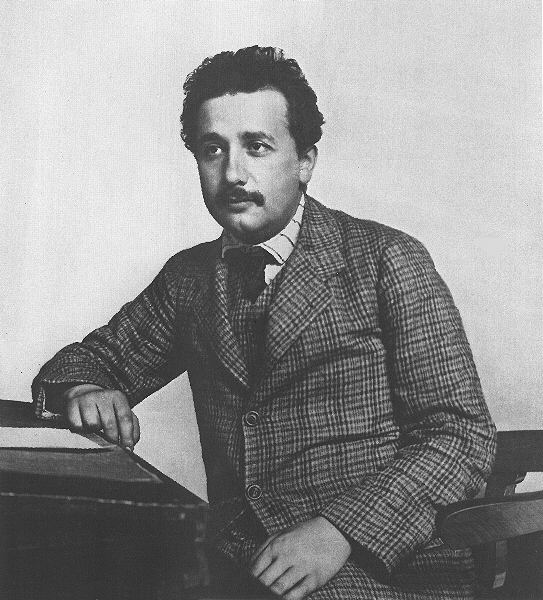
In 1905, an obscure patent clerk in Switzerland wrote four scientific papers, any one of which would have guaranteed his future fame. The clerk’s name was Albert Einstein. His four papers: proposed that energy exists in discrete levels called quanta (the photoelectric effect), demonstrated that the microscopic quiverings of small […]
Albert Einstein
3 posts

Here’s a selection of some of the most interesting features we’ve seen on the Internet this week: Physicist Frank Tipler observes that a couple of the most prominent physicists – including Einstein and Feynman – owe their success not so much to raw intelligence or “brightness,” but rather to an […]
This article originally appeared in Atlantis Vol. 3, #1, pp. 38-42 (Feb.-Mar. 1995). Copyright © 1995-1996 Hans Schantz The purpose of this article is to debunk a myth by which the advocates of mysticism and non-objective science seek to undermine science in general and physics in particular. Proponents of this […]