The mark of a really great book is that there’s a great deal to say about it. Twice now Fergus Fleming’s Barrow’s Boys: A Stirring Story of Daring, Fortitude, and Outright Lunacy has inspired posts. This will make it three, and I’m already anticipating post number four in a few days.
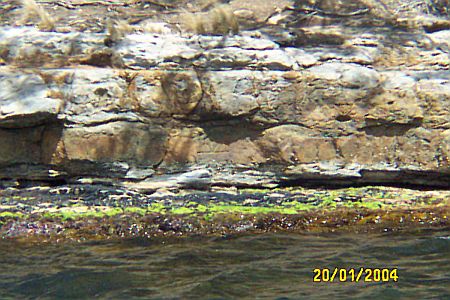
The late John Daly was a sufficiently effective skeptic of conventional climate science that upon his death in 2004 climate scientist Phil Jones characterized Daly’s death as “cheering news” in an e-mail to Michael (hockey stick) Mann. Author of The greenhouse trap: Why the greenhouse effect will not end life on earth, Daly latched on to a curious historical footnote – Captain Sir James Clark Ross’s 1841 visit to Tasmania as part of his voyage of exploration commissioned by John Barrow. During this visit, Ross collaborated with Thomas Lempriere to place a benchmark of the sea level. Taken as evidence of a rise in mean sea level, Daly argues persuasively that in fact the mark demonstrates no such substantial rise.
Daly’s fascinating analysis is captured in a series of posts at his website:
- Tasmanian Sea Levels: The Isle of the Dead, Revisited (2 February 2003) Part One Part Two
- Testing the Waters: A Report on Sea Level for the Greening Earth Society
- Sea Level at Hobart: A Failure to Authenticate (11 June 2005)
Daly makes his case through a painstaking forensic investigation of the historical documentation regarding Ross’s original benchmark and subsequent measurements of mean sea level. These are remarkably complicated yet important questions and Daly set an outstanding example of how to analyze them.