Here’s a video version of my May 23 talk at ATLOSCon in Atlanta Georgia on Fields Versus Action at a Distance. I subtitled my talk “How Electromagnetics Works,” because in retrospect, that would have made a better title. My talk discusses the conflict between action at a distance and field-based […]
History
144 posts
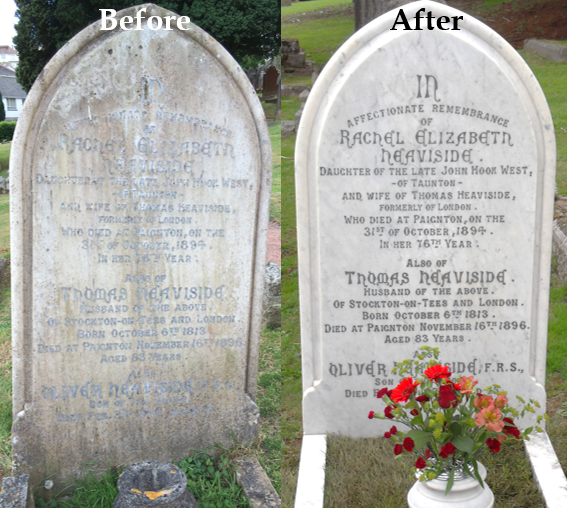
The Heaviside Memorial Project successfully raised funds and completed the restoration of the memorial to Oliver Heaviside and his family in the Paignton Cemetary near Torquay, Devon. Details and additional photos of the unveiling ceremony are available at their web site. The group, organized by the Newcastle Electromagnetics Interest Group […]
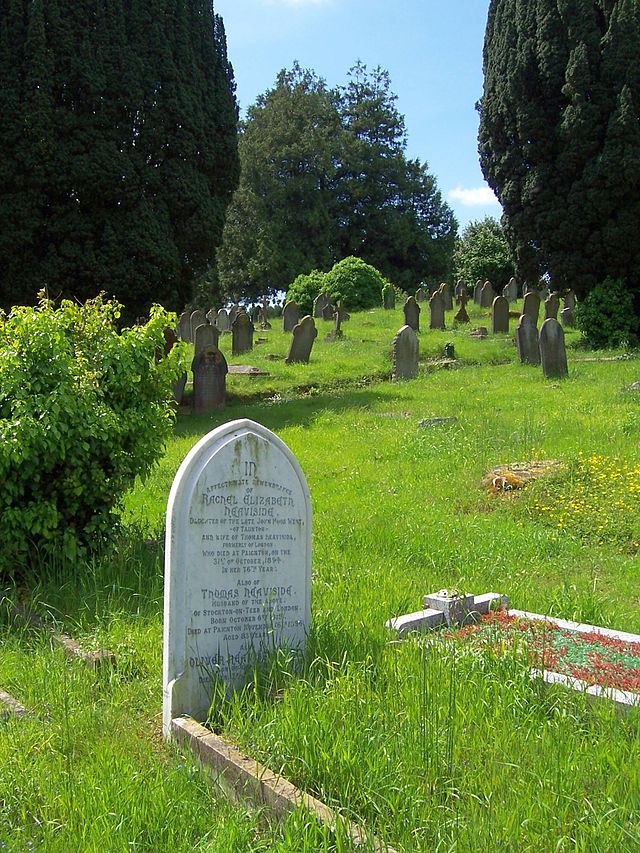
He developed the theory of transmission lines, coined such terms as inductance, impedance, and admittance, and rewrote James Clerk Maxwell’s awkwardly expressed equations into the vector form familiar to any student of electromagnetics. Today, Oliver Heaviside’s neglected tombstone is barely legible and is beginning to lean. Chris Spargo and Professor […]

Near-field wireless technology is an emerging area of great importance in Radio Frequency Identification (RFID). Specific applications include low frequency (LF) and high frequency (HF) RFID, Near-Field Communications (NFC), Near-Field Electromagnetic Ranging (NFER), and wireless power transfer. This talk discusses the origins of near-field wireless, surveys applications, presents near-field links […]
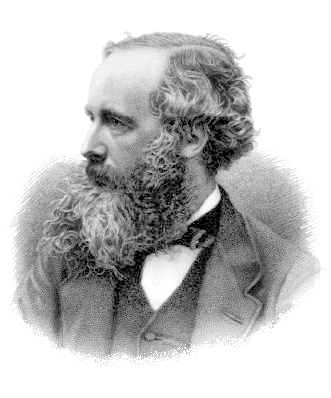
From Scientific Papers of James Clerk Maxwell, vol 2, LIV, p.311 (Proceedings of the Royal Institution of Great Britain, vol. VII, 1876). Emphasis added inn bold. I HAVE no new discovery to bring before you this evening. I must ask you to go over very old ground, and to turn […]

Writing an engaging and interesting book on a technical subject poses a significant challenge. Dive too deeply into the technical minutiae and you risk boring non-technical readers. Skim too superficially and you fail to do the subject justice. In his new book, You Are Here: From the Compass to GPS, […]
A couple of years ago, I surveyed the origins of the GPS system in a Sputnik-inspired satellite navigation system that operated using Doppler shift measurements of satellite signals. The TRANSIT or NAVSAT system yielded 100m – 400m location accuracy (accounts vary). The system included several firsts: the first nuclear powered satellite […]
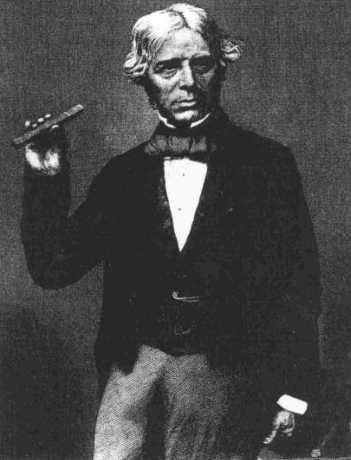
Any student of electromagnetics knows the story – Michael Faraday devised the ingenious concept that electric and magnetic effects were due to “fields” pervading space. Applying this simple concept, he was able to devise and demonstrate the phenomenon of induction, discovering the physics that gives rise to electric motors and […]

Today’s Google Doodle honors Heinrich Hertz (1857-1893), discoverer of radio waves, on the 155th anniversary of his birth. Heinrich Hertz was not the first to experiment with radio waves. Contemporaries such as Charles Hughes and Oliver Lodge performed similar work in parallel. What set Hertz apart, however, was his tenacity […]
There’s an abundance of wireless and location news from the past week. A new frontier for Google Maps: mapping the indoors | Google Blog Google maps adds indoor navigation | Engadget Google, Nokia, Ericsson And Navigation’s Next Frontier: The Great Indoors | Fast Company Malls tracked shopper’s cell phones on […]
Entrepreneur Steven Gary Blank delivers an outstanding lecture on “The Secret History of Silicon Valley.” The story is in large part how Frederick Terman invented the culture of entrepreneurship at Stanford and Silicon Valley in the aftermath of World War II. Blank’s lecture is peppered with fascinating details. For instance, I […]

The story seems an improbable fiction: a famous Hollywood actress invents a secret technology so far ahead of its time that it takes decades for the full potential of her idea to be recognized. Yet in 1941, actress Hedy Lamarr, collaborating with pianist George Anthiel, invented frequency-hopping, spread-spectrum technology. The […]
Reginald Victor Jones (or R. V. Jones) was born one hundred years ago today, on September 29, 1911. Jones was a British physicist who pioneered scientific intelligence, the art of applying scientific analysis to military intelligence. Part Richard Feynman, part Sherlock Holmes, Jones’ job was to anticipate German technical advances […]
Today’s post is on an obscure side note in antenna history. Henry Jasik is perhaps best known in antenna engineering circles as the Editor of the indispensable Antenna Engineering Handbook. However, he also played a minor role as a witness in the McCarthy Hearings. Transcripts of the McCarthy Hearings (1953-54 […]
I’ll be presenting a paper, “On the Origins of RF-Based Location,” at the 2011 IEEE Radio and Wireless Symposium this morning at 8:00 in room Cira A. The paper collects together the pre-WWII material I’ve blogged about under the History of RF-Based Location category here at ÆtherCzar. This paper will provide […]
The 2011 IEEE Radio and Wireless Symposium kicks off today in Phoenix, Arizona. ÆtherCzar will be live-blogging the proceedings. If you are in attendance, I look forward to seeing you around the conference and particularly at my three formal appearances (all on Wednesday): Paper Presentation: “On the Origins of RF-Based […]
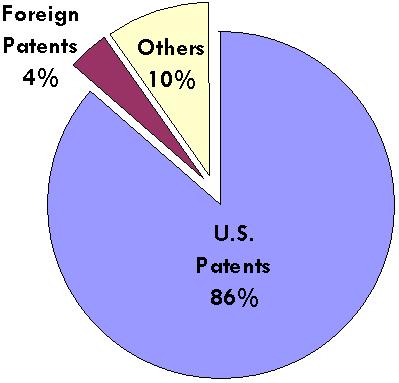
As noted previously on ÆtherCzar, the FCC recently issued an NPRM proposing to offer favorable treatment to academic researchers over researchers in industry. Yesterday, ÆtherCzar presented evidence from wide-ranging studies showing that industry, not academia is the principal fountainhead of innovation. This previous research did not specifically address wireless technology, […]
In yesterday’s post, FCC Overhauls Experimental Licensing to Favor Academia Over Industry, I explained how a recent Notice of Proposed Rule Making (NPRM) would offer academic researchers preferred status over researchers with non-academic affiliations. The NPRM justifies this discriminatory treatment on the grounds that that universities are “a powerhouse for […]
On this day, December 30, 1905, former Idaho governor Frank Steunenberg opened his garden gate. An explosion shattered the calm and mortally wounded Steunenberg. Steunenberg was targeted for his role in suppressing the violent 1899 miners’ strike in Coeur D’Alene, Idaho. The Steunenberg assassination led to a no-holds-barred trial pitting […]
Time for more wireless updates: Here’s a great article about the British precursor to LORAN: “GEE.” GEE was one of the first implementations of the “Time-Difference-of-Arrival (TDOA)” concept used in some modern RTLS implementations. A simple explanation of Ekahau RTLS: “The Perfect Pairing of RF and IR.” Whatever happened to […]
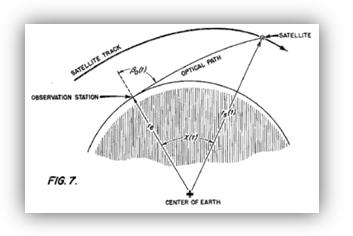
With the launch and tracking of Sputnik in 1957, it soon became obvious that the location of the satellite could be tracked by monitoring its Doppler shift. Frank McClure persuaded fellow researchers at Johns Hopkins Applied Physics Lab to devise a satellite navigation and positioning system based on the Doppler […]
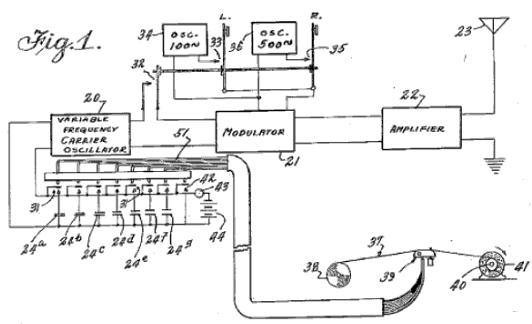
Spread-spectrum and ultra-wideband (UWB) technology arose during the Second World War. Actress Hedy Kiesler Markey (better known by her screen name, Hedy Lamarr) and George Antheil invented a frequency-hopping secret communication system. [1] The Figure below shows their frequency hopping transmitter. A record tape encodes a unique coding pattern to […]
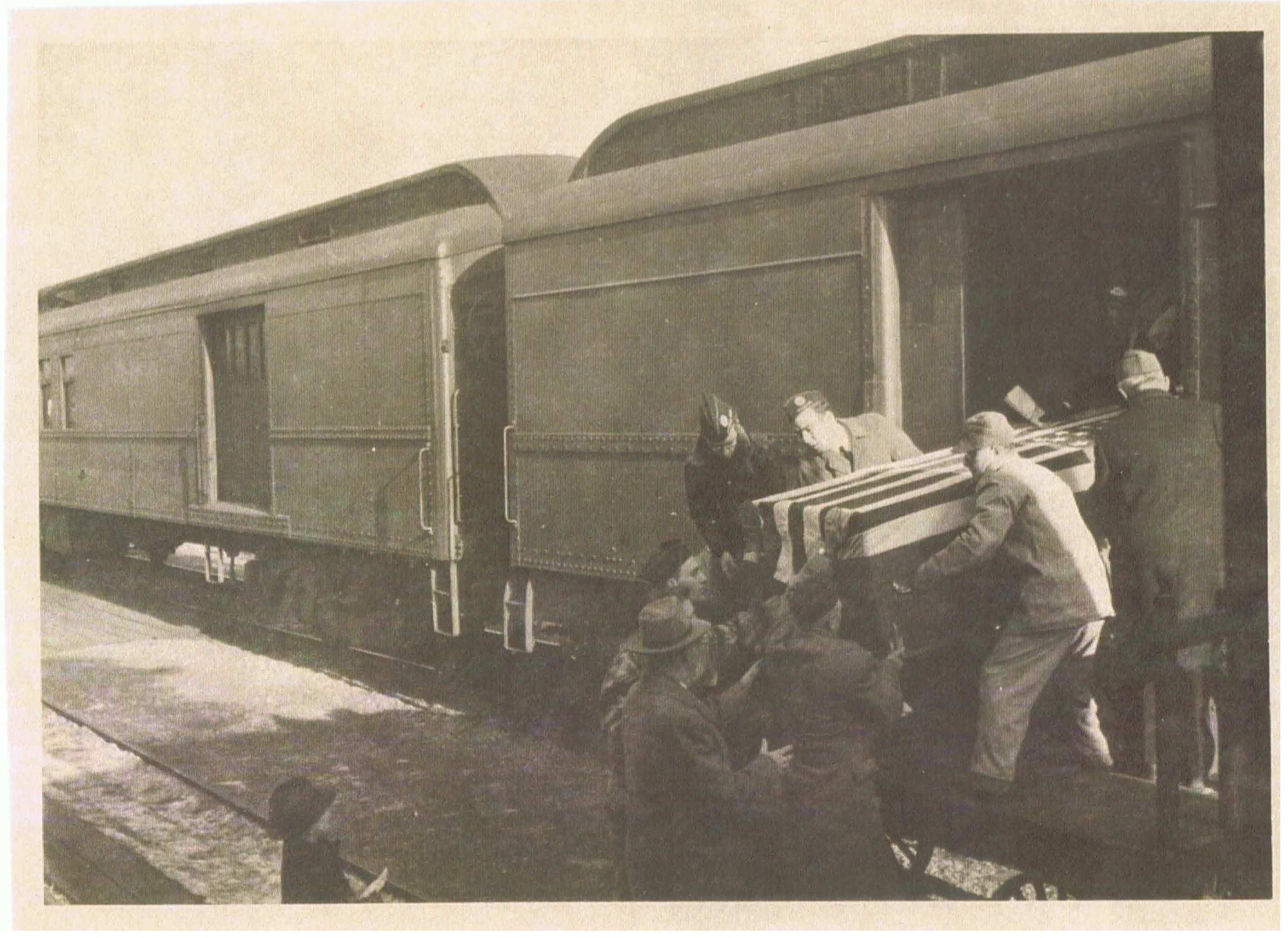
On 24 September, 1944 Operation Market Garden was capturing attention, as the Allies attempted to capture the “bridge too far” at Arnhem. Also that day, my grandfather, Paul Farnum, died at the 32nd Evac. Hospital of wounds received 21 September in the fighting for Luneville. He was buried at U.S. […]
The 1st and 3rd Battalions were ordered to attack in the vicinity of the railroad overpass and to clear out resistance in houses beyond the overpass. At noon, the defence of Luneville was put in the hands of the 313th Regiment. Acknowledging the severe resistance of the enemy, the 315th […]